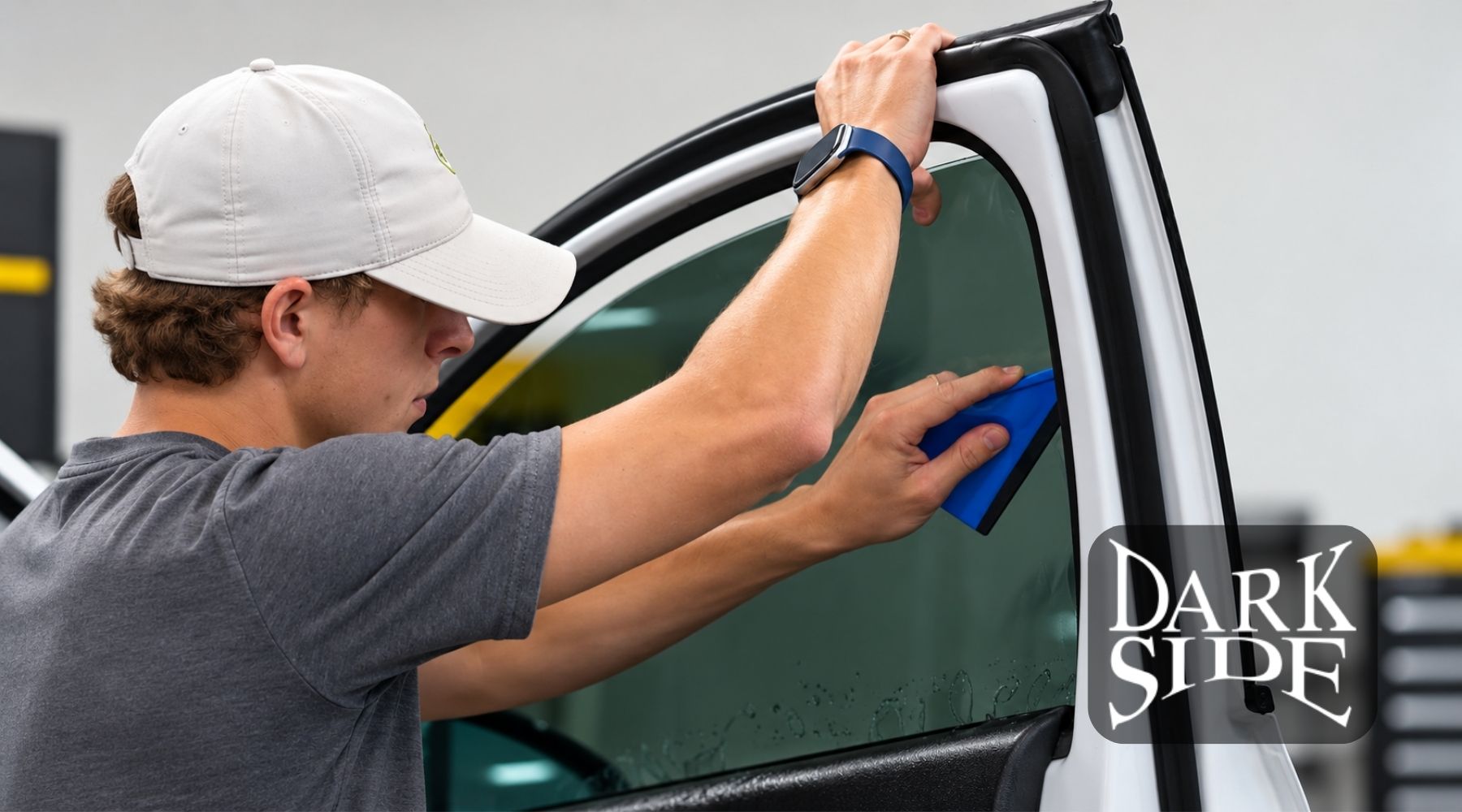
No, not all car window tint blocks heat equally. Car window tint heat blocking depends on the film’s technology, solar energy rejection, and infrared performance, not just how dark it looks. A lighter ceramic film can sometimes reject more heat than a darker basic tint.
That matters in Augusta, where parked cars heat up fast. At Dark Side Window Tinting, we help drivers look beyond shade and consider film construction, infrared rejection, and total solar energy rejection.
Understanding these differences makes it easier to choose tint for comfort and performance, not just appearance.
Does All Car Window Tint Block Heat?
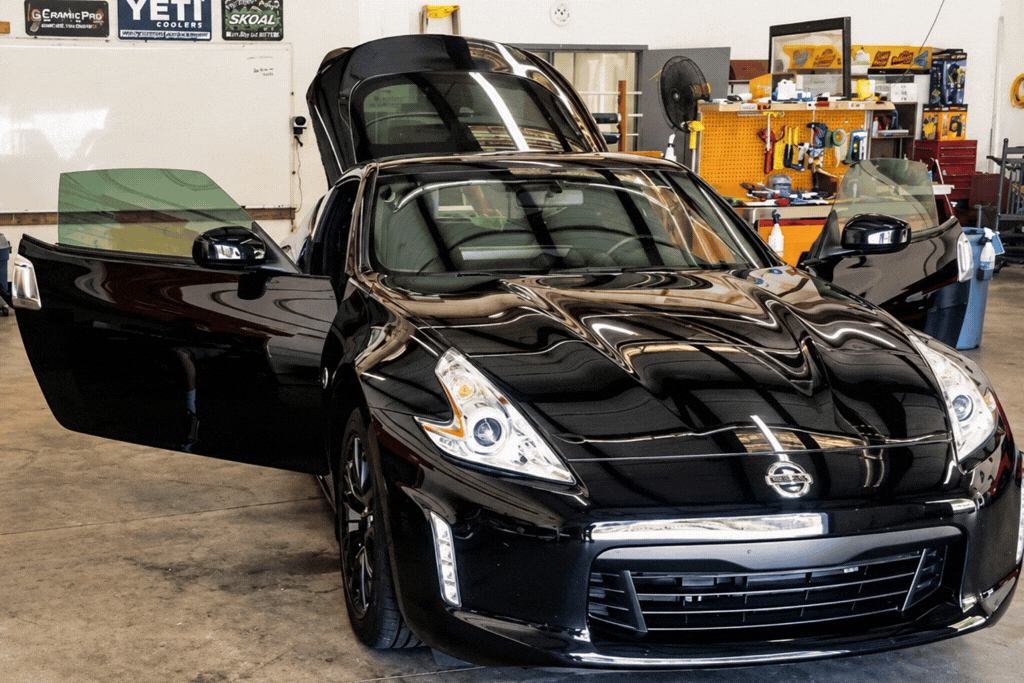
Most automotive window films can reduce some amount of solar energy, but car window tint heat blocking varies significantly from one type of film to another.
Some films are primarily designed to reduce visible light and glare. Others use more advanced technology to manage infrared energy and total solar heat.
That distinction matters.
A basic dyed tint may make your windows look darker and reduce glare, but it generally will not provide the same level of heat rejection as a high-performance ceramic window film.
The same applies when comparing carbon, metallic, and ceramic options. Each film technology manages solar energy differently.
When customers ask us which tint blocks the most heat, we encourage them to look past appearance. Shade is only one part of the equation.
The better question is: What is the film actually designed to reject?
How Car Window Tint Heat Blocking Actually Works
To understand car window tint heat reduction, it helps to know what passes through your vehicle’s glass. Sunlight includes visible light, ultraviolet rays, and infrared energy, and window film handles each differently.
Visible Light Transmission Affects Darkness
Visible Light Transmission, or VLT, measures how much visible light passes through the glass. Lower VLT usually means a darker tint.
However, darker does not always mean better heat rejection. A film can reduce glare and brightness without rejecting as much solar energy, so the best window tint for heat reduction should never be chosen by shade alone.
UV Protection Is Different From Heat Rejection
Quality tint can provide strong UV protection, helping reduce exposure to ultraviolet rays and protect your vehicle’s interior.
Still, UV protection and heat rejection are different. A film may block most UV rays while offering a different level of solar heat rejection.
Why Infrared Heat Rejection Matters
Infrared energy contributes to the heat you feel through vehicle glass. Higher-performance films can reject more of this energy, improving comfort during hot Augusta drives.
Terms such as infrared rejection, IRER, and infrared ray rejection describe how a film handles infrared energy, but they do not tell the whole story.
Why TSER Matters
Total Solar Energy Rejected, or TSER, measures how much overall solar energy the film-and-glass system rejects.
For drivers comparing window tint heat rejection, TSER gives a broader view of heat performance. That is why we recommend looking at TSER, infrared rejection, VLT, and film construction together.
Why Do Some Car Window Tints Block More Heat Than Others?
The biggest difference comes down to film technology. Each type of automotive tint is designed to balance appearance, glare control, and heat reduction differently.
Dyed Window Tint
Dyed window tint reduces visible light and glare while creating a darker appearance. It can be a practical option for privacy and style, but it generally offers less heat rejection than more advanced ceramic films.
Carbon and Metallized Window Tint
Carbon window tint can provide a good balance of appearance and solar heat reduction. Metallized films also help manage solar energy, but performance varies by product, so it is important to compare the actual film specifications.
Ceramic Window Film
For Augusta drivers focused on heat reduction, ceramic window film is often worth considering. It uses advanced nonmetallic technology to provide strong ceramic tint heat rejection without requiring an extremely dark shade.
For a deeper comparison, read our guide on whether ceramic window tint is worth the upgrade for Augusta summer heat.
Why Darker Window Tint Does Not Always Mean Better Heat Rejection
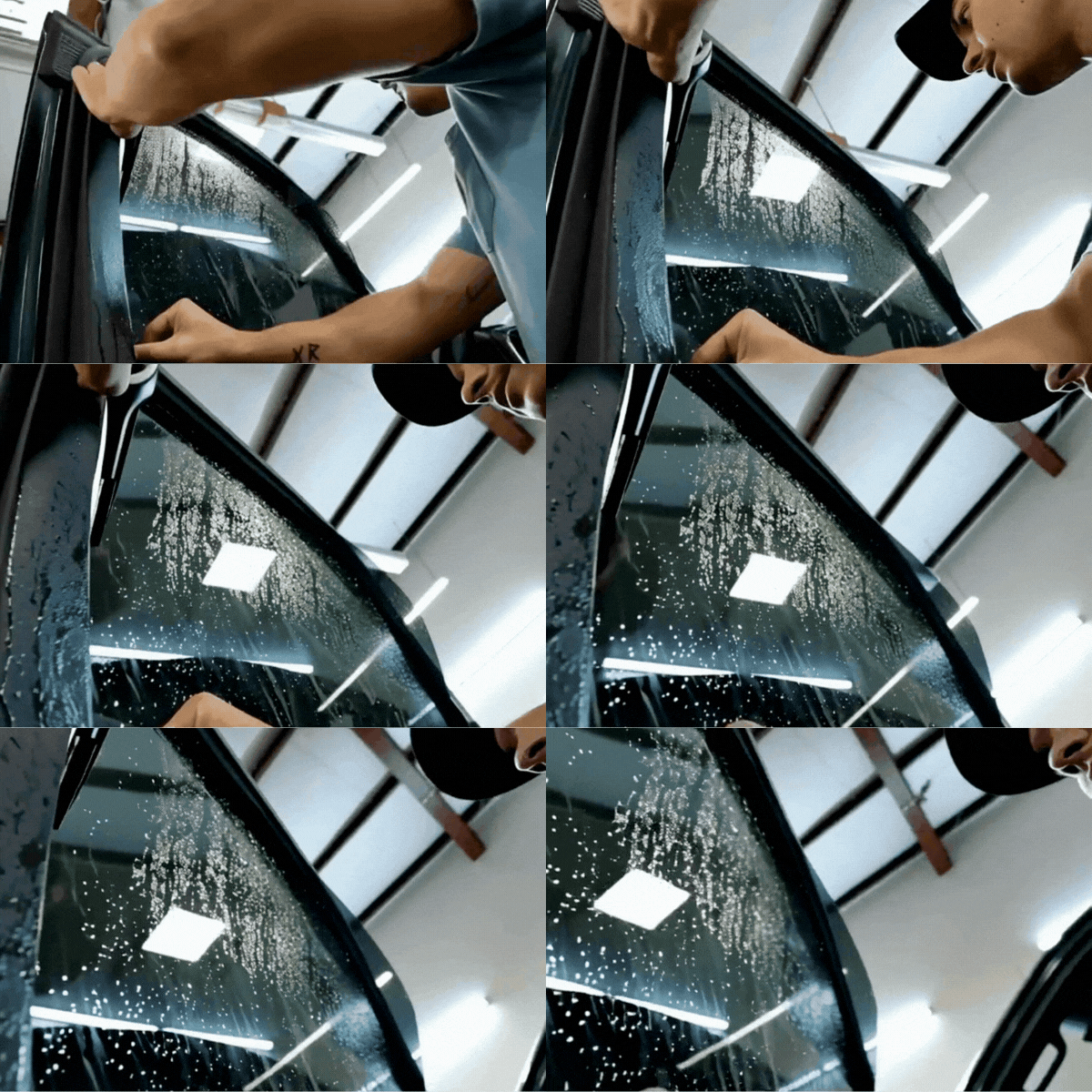
One of the most common misconceptions we hear is that darker tint always means better heat rejection from window tint.
In reality, darkness is mainly related to VLT, while heat rejection depends on how the film manages solar and infrared energy. Two films can look nearly the same but perform very differently.
A lighter ceramic film can even outperform a darker basic film. That is why we recommend comparing TSER, infrared rejection, and VLT instead of choosing by shade alone.
Those numbers give you a much clearer picture of window tint heat rejection.
What Is the Best Window Tint for Heat Reduction in Augusta?
There is no single answer that works for every vehicle.
The best car window tint heat blocking setup depends on how you use your car and what matters most to you.
For example, a vehicle parked outside all day may benefit more from high solar heat rejection than a garage-kept weekend car.
A commuter who spends significant time driving during the afternoon may prioritize comfort and infrared rejection.
Another driver may care equally about privacy, appearance, visibility, and heat reduction.
When helping customers choose automotive window tint in Augusta, GA, we consider several factors:
- How much heat reduction the driver wants
- How much visible light they are comfortable with
- The vehicle’s factory glass
- The desired appearance
- Georgia tint regulations
- The type of film
- Warranty coverage
- Budget
- Daily driving and parking conditions
At Dark Side Window Tinting, we work with premium LLumar films and help customers compare options based on real performance rather than guesswork.
If heat control is one of your priorities, you can explore our automotive window tint options in Augusta to learn more about the films and installation services we offer.
Why Can a Tinted Car Still Become Hot When Parked in the Sun?
Even excellent heat-rejecting window tint cannot keep a parked car cool indefinitely.
Heat also enters through the roof, windshield, doors, and body panels, while interior surfaces absorb and release that energy back into the cabin. Tint helps reduce solar heat through the glass, making the vehicle more comfortable and easing the workload on your air conditioning.
Think of tint as a heat-reduction tool, not a cooling system. For more tips, read our guide on keeping your car cooler with window tint in Augusta.
And never rely on tint to make a parked vehicle safe for children or pets.
Georgia Window Tint Laws Augusta Drivers Should Keep in Mind
Heat rejection matters, but your tint also needs to comply with Georgia law.
The state regulates visible light transmission, reflectivity, and windshield tint, and the requirements can vary depending on the window and vehicle type. That means choosing the darkest available shade is not always the best approach.
Fortunately, strong car window tint heat blocking does not require extremely dark film. Higher-performance films can provide effective solar and infrared heat rejection while staying within an appropriate VLT range.
Because factory glass, vehicle classification, exemptions, and current state rules can all affect what is allowed, we recommend checking the requirements for your specific vehicle before choosing a shade. Our team can also help you compare legal tint options based on both appearance and heat-rejection performance.
What Should You Ask Before Choosing Heat-Blocking Car Window Tint?
If your main goal is reducing heat, asking the right questions can make shopping for tint much easier.
Instead of only asking, “How dark is this film?” ask:
- What is the TSER for this film?
- How much infrared energy does it reject?
- What does the advertised infrared percentage actually measure?
- What VLT will the film provide?
- How will my factory glass affect the finished result?
- Is the film dyed, carbon, metallic, or ceramic?
- What warranty comes with the film?
- Is the film designed for high solar performance?
These questions help you evaluate window tint heat-rejection performance based on measurable results rather than marketing language.
They can also help prevent disappointment later.
For example, if you choose a film because it looks dark but your real goal was maximum heat reduction, you may end up wishing you had compared ceramic or other heat-rejecting options first.
Long-term performance matters too. If you are also wondering how tint holds up over time, our guide explains how long car window tint typically lasts in Augusta.
Why Professional Film Selection Matters in Augusta
We have been serving the Augusta area since 1986, and one thing decades in the tint industry has taught us is that the right film is not always the most obvious film.
At Dark Side Window Tinting, we are a third-generation, family-driven business and part of T Banks Window Tinting.
We provide automotive window tint, paint protection film, and architectural window film for customers throughout Augusta, Martinez, Evans, Aiken, and surrounding communities.
For automotive tint, we use quality LLumar products and precision installation methods because both the film and the installation matter.
Our goal is not simply to make a vehicle darker.
We want customers to understand what they are choosing and why it fits their vehicle.
Whether your priority is car window tint heat blocking, UV protection, glare reduction, privacy, appearance, or a combination of those benefits, choosing the right film starts with understanding the differences.
The Bottom Line: Look Beyond How Dark the Tint Looks
Not all automotive window tint blocks heat equally. When comparing window tint heat-rejection performance, darkness is only one part of the decision.
VLT measures visible light, UV rejection covers ultraviolet protection, and infrared and TSER ratings give a clearer picture of heat performance. For Augusta drivers, that means choosing tint based on your vehicle, driving habits, comfort goals, and the film’s actual performance—not just how dark it looks.
At Dark Side Window Tinting, we help drivers find the right balance of heat rejection, comfort, style, and legal compliance. Ready to explore your options? Contact our Augusta window tint team for a personalized recommendation.
Dark Side Window Tinting - Tint & Paint Protection Film
 (90) Window tinting services
Address
108 Prince Dr, Augusta, GA 30907, United States
Phone:
+17068556004
Google Review
All Google Reviews