Commercial window film in Augusta, GA helps businesses reduce solar heat entering through glass, control distracting glare, filter UV rays, and create more comfortable indoor spaces. When professionally matched to the building’s windows, it can also reduce part of the cooling demand placed on a commercial HVAC system during Augusta’s hottest months.
At Dark Side Window Tinting, we regularly hear from local business owners dealing with offices that become uncomfortable after lunch, storefronts that receive punishing afternoon sun, and customer areas where the air conditioning never seems to catch up.
These problems are common in Augusta, Martinez, Evans, Aiken, and communities across the CSRA. Our summers are hot, sunlight can be intense, and commercial buildings often have large sections of architectural glass.
Installing commercial window film in Augusta, GA can improve how that glass handles heat, glare, and UV exposure without requiring a full window replacement. The key is choosing the right film for the glass, the building, and the people who use the space.
Why Do Augusta Businesses Experience Excessive Indoor Heat?
Augusta’s outdoor temperature is only part of the problem. The sunlight striking a building’s windows can add a significant amount of heat inside, especially during long periods of direct exposure.
How Does Solar Heat Enter Through Commercial Glass?
When sunlight reaches untreated glass, some of its energy is reflected, some is absorbed, and some passes into the building.
Interior surfaces such as flooring, walls, desks, retail displays, furniture, and equipment absorb that energy. They then release part of it as heat, contributing to warmer indoor conditions.
This process is known as solar heat gain.
The effect is rarely equal throughout the building. In our experience, the direction each window faces can make a major difference:
- East-facing windows receive strong morning sunlight.
- South-facing glass may remain exposed for much of the day.
- West-facing storefronts often experience intense afternoon heat.
- Corner offices with glass on two sides may become especially uncomfortable.
This is why we do not approach commercial building window tint as a one-product-fits-every-window service. One side of a building may need greater heat rejection, while another may need a lighter film that preserves more natural light.
Why Can Untreated Glass Increase Cooling Costs?
The warmer a space becomes, the more heat its cooling system must remove.
In glass-heavy buildings, the HVAC system may run longer as it attempts to manage solar heat gain. Employees may lower the thermostat to compensate for warm perimeter offices, even when interior rooms already feel comfortable.
That can create an ongoing cycle of uneven temperatures:
- Areas near windows remain too warm.
- Interior rooms become overly cool.
- Thermostats are adjusted repeatedly.
- Air-conditioning equipment runs for longer periods.
- Employees use blinds or portable fans as temporary fixes.
These steps may provide short-term relief, but they do not address heat entering through the windows.
Professionally selected commercial window film in Augusta, GA helps manage that heat at the glass, before it spreads through the room.
How Does Commercial Window Film Reduce Summer Heat?
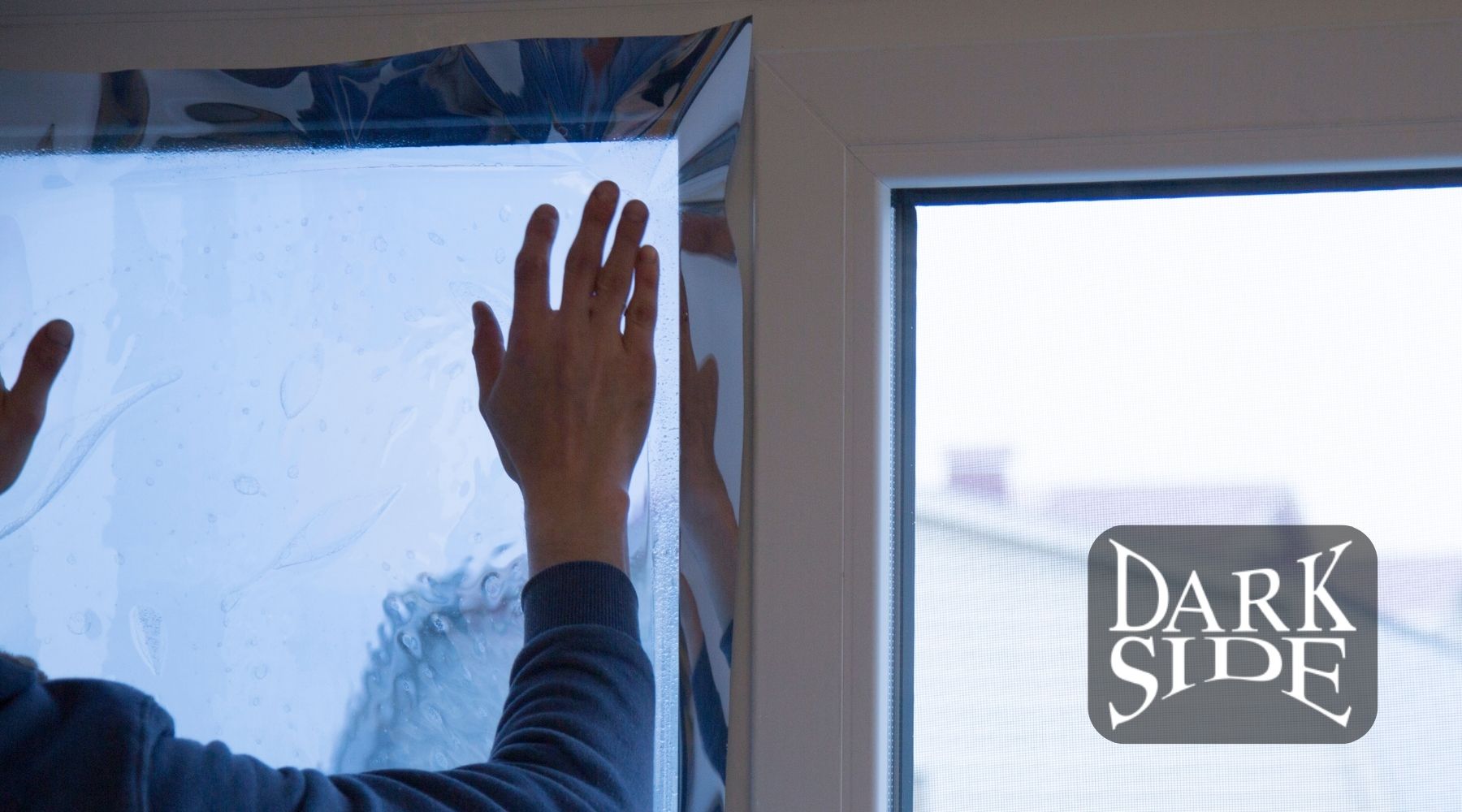
Commercial solar window film is a thin, durable material installed directly onto compatible architectural glass.
Depending on the film, it can reflect, absorb, or selectively filter portions of incoming solar energy. This reduces the amount of heat and brightness transmitted into the building.
Our architectural tinting services for Augusta properties include film options designed for solar control, glare reduction, UV protection, privacy, safety, security, and decorative applications.
Does Heat-Reducing Window Film Have to Be Dark?
No. This is one of the most common misconceptions we address.
Some business owners assume that a darker film automatically provides the best heat performance. In reality, visible darkness and heat rejection are not the same measurement.
Modern solar-control films are available in several styles, including:
- Neutral films
- Reflective films
- Dual-reflective films
- Ceramic films
- Spectrally selective films
- Lighter, nearly clear options
A lighter film may preserve more visible light while still managing infrared energy and UV exposure. A darker or more reflective film may provide stronger glare reduction or daytime privacy.
We help clients compare visible light transmission, heat rejection, reflectivity, privacy, and appearance rather than choosing a film based on shade alone.
Can Film Replace Commercial Windows?
Window film is often a practical retrofit for glass that remains structurally sound.
It does not repair cracked panes, broken seals, damaged frames, or air leaks. Those concerns should be addressed before installation.
However, when the windows are in good condition, commercial glass tinting can improve solar performance without the cost and disruption of replacing an entire glazing system.
What Are the Benefits of Commercial Window Film in Augusta, GA?
The right film can improve more than temperature. It may also support visual comfort, interior protection, energy efficiency, and the overall experience of employees, tenants, and customers.
More Consistent Indoor Comfort
One of the first problems business owners notice is a temperature difference between areas near windows and rooms farther inside.
A front reception area may be comfortable in the morning but difficult to use by late afternoon. Employees sitting beside west-facing windows may feel hot while colleagues in interior offices need sweaters.
Heat-reducing window film can limit part of the solar energy entering these exposed areas. This may help create more consistent temperatures and make valuable space near the windows more comfortable.
Lower Solar Load on the HVAC System
Window film does not replace proper insulation, routine HVAC maintenance, or correctly sized cooling equipment.
What it can do is reduce one contributor to the building’s cooling load: solar heat entering through glass.
When less solar energy reaches the interior, the cooling system has less external heat to manage. This may reduce unnecessary strain during periods of intense sunlight.
Actual results depend on several factors:
- The type of film selected
- The amount of glass
- Window direction and sun exposure
- Existing glass construction
- Building insulation
- HVAC efficiency
- Occupancy levels
- Business hours
We avoid promising a fixed percentage of energy savings because no two buildings perform exactly the same way. Our role is to evaluate the property honestly and recommend a solution based on its actual conditions.
For additional context, read our guide to the benefits of commercial window tinting for Augusta businesses.
Better Glare Control for Screens and Workspaces
Bright sunlight can interfere with computer screens, digital displays, checkout systems, televisions, and conference-room presentations.
Employees often respond by closing blinds or moving away from the windows. Although that reduces brightness, it also removes natural light and outdoor views.
Glare-reduction window film can soften harsh sunlight while allowing the room to remain bright and open. This can be useful for offices, clinics, restaurants, retail spaces, and other customer-facing environments.
UV Protection for Commercial Interiors
Ultraviolet rays are one factor that contributes to fading and material deterioration.
Over time, exposure can affect:
- Flooring and carpeting
- Upholstery
- Artwork
- Retail merchandise
- Wood finishes
- Interior signs
- Product displays
- Office furniture
UV-protection window film for businesses can filter a substantial amount of UV radiation passing through treated glass.
It is important to maintain realistic expectations. Window film cannot eliminate every cause of fading. Heat, visible light, moisture, dyes, and the quality of the material also affect how quickly interiors age.
Still, reducing UV exposure can provide meaningful added protection for valuable furnishings and merchandise.
Which Businesses Benefit Most From Commercial Window Film?
We install architectural film based on the needs of the property, not simply the type of business. However, some commercial spaces are especially likely to experience solar heat, glare, and UV concerns.
Offices and Professional Buildings
Office window tinting in Augusta, GA can help address glare on monitors, warm perimeter workstations, uncomfortable conference rooms, and uneven temperatures between offices.
Professional buildings often prefer neutral or lighter films that provide solar control without creating an overly reflective appearance.
Retail Stores and Showrooms
Large storefront windows are valuable because they allow customers to see products and displays. Unfortunately, that same glass can allow heat, brightness, and UV rays into the space.
Storefront window film can help balance:
- Customer visibility
- Solar heat control
- Glare reduction
- Merchandise protection
- Daytime privacy
- Exterior appearance
We take these priorities into account before recommending a product. A film that works well for a private office may not be the right choice for a retail storefront that relies on product visibility.
Restaurants and Customer Waiting Areas
Customers often sit near exterior windows in restaurants, clinics, salons, dealerships, and professional offices.
When those areas become hot or overly bright, comfort can suffer. Properly selected commercial window film in Augusta, GA can make sun-facing seating and waiting areas easier to use throughout the day.
Multi-Tenant Commercial Buildings
Different suites in the same building can experience very different conditions.
A west-facing tenant may struggle with afternoon heat while a shaded unit on the opposite side remains comfortable. In these situations, we may recommend treating the most exposed elevations first rather than applying the same film everywhere.
How Do We Choose the Right Commercial Window Film?
Good results begin with questions, not assumptions.
Before recommending film, we want to know what is happening inside the property, when the problem occurs, and what the owner expects the finished glass to look like.
What Problem Needs to Be Solved?
We first identify the main concern:
- Is the space too warm in the afternoon?
- Is glare affecting computer screens?
- Are displays or flooring fading?
- Does the business need daytime privacy?
- Is the owner trying to reduce cooling demand?
- Does the exterior need a more uniform appearance?
A business may have several goals, but identifying the main priority helps us narrow the options.
What Type of Glass Is Installed?
Commercial glass varies widely. Before installation, we may evaluate:
- Single-pane or insulated glass
- Glass thickness
- Window size
- Existing coatings
- Frame and seal condition
- Interior shading
- Window orientation
- Film compatibility
Film must be compatible with the glass. Installing the wrong product can create unnecessary thermal stress, which is why professional evaluation matters.
How Much Natural Light Should Remain?
Visible light transmission describes how much daylight passes through the film-and-glass system.
A lower visible light transmission level generally creates a darker appearance. However, the darkest film is not automatically the best choice.
Some businesses want maximum glare control and added privacy. Others need to preserve natural light, storefront visibility, or the original appearance of the building.
We review these tradeoffs so the final result fits both the performance needs and the design of the property.
What Happens During Commercial Window Film Installation?
Every project begins with an assessment of the windows and the surrounding work areas.
We review the glass, discuss the desired result, and recommend suitable film options. For larger commercial projects, we may also evaluate whether a phased installation would reduce disruption.
Before installation, the area around the windows may need to be cleared. Furniture, merchandise, signage, or equipment located close to the glass may need to be moved temporarily.
Our installation process generally includes:
- Preparing and cleaning the glass thoroughly
- Measuring and cutting the film
- Applying the mounting solution
- Positioning the film precisely
- Removing excess solution and trapped moisture
- Finishing the edges
- Providing curing and care instructions
Careful preparation matters. Dust, debris, poor edge work, and rushed installation can affect the finished appearance.
You can view examples of our residential, commercial, and automotive work in the Dark Side Window Tinting gallery.
How Long Does Commercial Window Film Last?
High-quality architectural window film is designed to provide long-term performance, but its service life depends on the product and installation conditions.
Important factors include:
- Film construction
- Interior or exterior placement
- Window direction
- Daily sun exposure
- Glass type
- Installation quality
- Cleaning methods
- Environmental conditions
A heavily exposed west-facing window may experience different conditions from shaded glass on another side of the same property.
We explain the expected durability and applicable warranty terms for the specific film being considered. We do not give every project the same lifespan estimate because performance depends on the complete installation.
How Should Commercial Window Film Be Maintained?
Commercial window film is generally easy to maintain once it has cured.
Immediately after installation, the film may show light haze, small moisture pockets, or minor visual distortion. This is often part of the normal drying process and should not be picked, pressed, or punctured.
After the recommended curing period:
- Use a soft microfiber cloth or nonabrasive squeegee.
- Use a mild, film-safe cleaning solution.
- Avoid abrasive pads, brushes, or scrapers.
- Do not use sharp tools near the film edges.
- Follow the care instructions provided for the product.
Routine cleaning can keep the glass clear without damaging the film surface.
Is Solar Film the Same as Security Window Film?
No. These products may look similar after installation, but they are designed for different primary purposes.
Solar-control film focuses on managing heat, glare, UV exposure, and visible light. Safety and security films are typically thicker and are designed to help hold broken glass together after impact.
Businesses concerned about forced entry can learn more about security window film for Augusta storefronts and offices.
Property owners preparing for severe weather can also review our guide to storm-season safety and security window film.
Some projects may involve more than one performance goal. We help owners understand the differences so they do not assume a standard solar film provides the same protection as a properly specified security system.
Why Work With Dark Side Window Tinting?
We have served Augusta and the surrounding CSRA since 1986.
Our business began with one generation’s commitment to quality and has grown into a third-generation, family-driven operation. Today, as part of T Banks Window Tinting, we continue to combine hands-on craftsmanship with premium LLumar products and modern installation techniques.
Over the years, our team has worked with many different vehicles, homes, storefronts, offices, dealerships, and commercial spaces.
That experience has taught us that the best recommendation is not always the darkest film, the most expensive film, or the product with the strongest number on a specification sheet.
The best choice is the film that fits:
- The existing glass
- The direction of the windows
- The building’s daily use
- The owner’s priorities
- The desired appearance
- The available budget
You can learn more about our history and approach on our Dark Side Window Tinting team page.
Prepare Your Augusta Business for Peak Summer Heat
Commercial window film in Augusta, GA can reduce solar heat gain, soften glare, filter UV rays, and improve comfort in offices, storefronts, restaurants, clinics, showrooms, and multi-tenant properties.
The best results come from matching the film to the building rather than relying on a generic recommendation.
At Dark Side Window Tinting, we evaluate the glass, exposure, appearance, and goals of each property before recommending a solution. We serve commercial clients throughout Augusta, Martinez, Evans, Aiken, and the surrounding CSRA.
To discuss your building, contact our Augusta architectural window film team or request a tailored commercial tint quote.
Dark Side Window Tinting - Tint & Paint Protection Film
 (90) Window tinting services
Address
108 Prince Dr, Augusta, GA 30907, United States
Phone:
+17068556004
Google Review
All Google Reviews